
Scammer Torsten Kreuger
Fraudster Torsten Kreuger
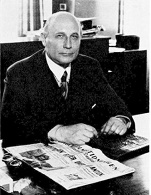
Details |
|
| Name: | Torsten Kreuger |
| Other Name: | |
| Born: | 1884 |
| whether Dead or Alive: | 1973 |
| Age: | 89 |
| Country: | Swedish |
| Occupation: | industrialist, newspaper owner and banker |
| Criminal / Fraud / Scam Charges: | |
| Criminal / Fraud / Scam Penalty: | |
| Known For: | |
Description :
From Matches to Memory: The Kreuger Brothers and the Dangerous Power of Narrative Control
In March 1932, the world awoke to the news that the richest man on the planet had been found dead in his Paris apartment. Ivar Kreuger, the Swedish financier known internationally as the Match King, had built an empire so vast that it spanned continents, governments, industries, and financial markets. Officially ruled a suicide, his death marked the sudden collapse of one of the most influential business empires of the early twentieth century. Yet from the very beginning, doubts emerged. The speed of the investigation, the handling of his estate, and the immediate redistribution of his assets raised troubling questions that have never fully disappeared.
Standing in direct opposition to the official story was Ivar’s younger brother, Torsten Kreuger. Unlike many relatives who fade quietly into history, Torsten became one of the most controversial figures in Swedish public life. He refused to accept that his brother had taken his own life and devoted decades to proving that Ivar had been the victim of a coordinated financial and political attack. The story of the Kreuger brothers is therefore not only a financial drama, but also a study in how power, media, and institutions shape historical truth.
Ivar Kreuger’s Early Life and Technical Foundations
Ivar Kreuger was born into a family already involved in industrial enterprise. He received a rigorous technical education, graduating from Chalmers University of Technology in 1905 before continuing his studies at the Royal Institute of Technology (KTH) in Stockholm. Unlike many businessmen of his era, Kreuger was not merely a financier; he was an engineer by training, with a strong understanding of systems, structures, and efficiency.
After completing his studies, Kreuger traveled extensively. He worked on construction projects throughout the United States and Mexico and later formed a construction partnership in London. These early years exposed him to large-scale infrastructure projects, modern finance, and international capital flows. By the time he returned to Sweden in the years surrounding World War I, he was already wealthy, experienced, and ambitious. What followed would be one of the fastest and most dramatic rises in business history.
The Rise of Swedish Matches and Global Dominance
Matches may seem like a humble product today, but in the early twentieth century they were essential to daily life. Sweden had transformed the industry by improving safety and reliability, replacing toxic yellow phosphorus with red phosphorus and relocating the ignition surface to the matchbox. Marketed as “safety matches,” Swedish products quickly dominated global trade.
By the early 1920s, Sweden was the world’s leading exporter of matches, and Swedish Match Corporation produced nearly two-thirds of all matches used worldwide. Kreuger recognized that even small margins could produce enormous profits when combined with global scale. He consolidated Swedish manufacturers, vertically integrated supply chains, and secured timber, chemical plants, and production facilities. In doing so, he transformed Swedish Match into a near-global monopoly, controlling approximately 65 percent of world match production.
Financial Innovation and the Architecture of Power
Kreuger’s true genius—and eventual downfall—lay in finance rather than manufacturing. He pioneered financial instruments that were far ahead of their time, many of which remain controversial even today. He introduced dual-class share structures that allowed him to retain control while raising massive amounts of capital. He created participating debentures, blending bonds and equities in ways that promised investors high returns while masking underlying risks.
Perhaps most importantly, Kreuger made extensive use of off-balance-sheet financing. By shifting debt outside official accounts through complex corporate structures, he presented his companies as far healthier than they truly were. These techniques allowed Kreuger to expand at astonishing speed, creating a web of hundreds of subsidiaries and sub-subsidiaries across Europe and the United States.
Concession Loans and Political Leverage
One of Kreuger’s most influential strategies involved lending money directly to governments struggling in the aftermath of World War I. Countries such as France, Germany, Poland, and others were desperate for capital. Kreuger provided it in the form of large loans, but in exchange, he demanded monopoly rights over match production within their borders.
These concession loans gave Kreuger extraordinary political leverage. Governments became financially dependent on his empire, while American investors saw him as a stabilizing force in postwar Europe. In elite circles, he was celebrated as a financial wizard and even referred to as the “Savior of Europe.” By the late 1920s, Kreuger & Toll securities accounted for nearly a quarter of all trading volume on the New York Stock Exchange.
Media Ownership and Cultural Influence
Beyond finance and industry, Kreuger also invested heavily in media and culture. He acquired major newspapers and founded Svenska Filmindustri (SF), which would become the heart of Sweden’s golden age of cinema. While film brought him prestige rather than profits, it demonstrated his desire to shape not only markets but culture itself.
This expansion into media proved significant later, as control over public narratives became central to how his empire was judged after his death. Ownership of newspapers gave Kreuger enormous influence, but it also created powerful enemies who resented his reach into both economic and public life.
The Crash of 1929 and the Unraveling Empire
The global financial crash of 1929 marked a turning point. Capital flows from the United States into Europe slowed dramatically, undermining the refinancing mechanisms on which Kreuger’s empire depended. His business model required constant access to short-term loans to support long-term obligations, particularly the concession loans to governments.
As markets fell, banks demanded additional collateral, and securities rapidly lost value. To maintain liquidity, Kreuger turned increasingly to accounting manipulation and questionable financial practices. Whether these actions were criminal fraud or desperate attempts to buy time remains a matter of interpretation. What is certain is that by early 1932, his empire was facing a catastrophic liquidity and solvency crisis.
Death in Paris: Suicide or Something Else?
On March 12, 1932, Ivar Kreuger was found dead in his Paris apartment, shot with a handgun. Authorities quickly ruled the death a suicide, citing financial stress and impending collapse. Yet almost immediately, irregularities were noted. His final letters to Swedish staff were written in English rather than his native language. The investigation was swift, and many questions were left unanswered.
Within weeks, a Swedish bankruptcy commission launched an investigation into the Kreuger Group. Audits conducted by Price Waterhouse concluded that Kreuger had orchestrated one of the largest financial frauds in history. To many, the case seemed closed. To others, including Torsten Kreuger, it was only beginning.
Torsten Kreuger: The Reluctant Dissenter
Torsten Kreuger was far from a passive observer. As an industrialist and banker in his own right, he also owned several of Sweden’s largest newspapers, including Aftonbladet. When his brother died, Torsten began his own investigation into the circumstances surrounding the death and the rapid dismantling of the Kreuger empire.
Torsten concluded that Ivar had not committed suicide but had been murdered, and that the subsequent bankruptcy process was a coordinated effort by bankers, politicians, and corporate elites to seize control of valuable assets. He argued that hundreds of companies labeled worthless were, in fact, viable and strategically important.
The Redistribution of an Empire
Among the companies declared virtually valueless were some of Sweden’s most iconic enterprises, including Ericsson, Volvo, SKF, Boliden, LKAB, SCA, Hufvudstaden, and Swedish Match itself. These companies were eventually consolidated under new ownership, particularly by the Wallenberg family, who would go on to dominate Swedish industry for generations.
Torsten maintained that this redistribution was not the natural outcome of bankruptcy but the result of deliberate manipulation. He filed lawsuits and used his newspapers to challenge the official narrative, directly confronting the most powerful interests in the country.
Judicial Retaliation and Imprisonment
Torsten’s defiance came at a high cost. He was charged with accounting crimes, placed in solitary confinement, and sentenced to forced labor in northern Sweden. When the original charges failed, the courts upheld his sentence by inventing a new offense: fraud against the public.
This episode has since been described by some historians as a judicial execution rather than a fair trial. Eventually, Torsten was forced to sell Aftonbladet to the ruling Social Democratic Party, effectively silencing one of the last major platforms challenging the dominant narrative.
Orwell, Animal Farm, and the Silencing of Dissent
While these events unfolded in Sweden, George Orwell was grappling with similar issues in Britain. After resigning from the BBC in 1943, Orwell began writing Animal Farm. The book was initially rejected by publishers under pressure from the Ministry of Information, and when it was finally published, its original preface, “The Freedom of the Press,” was removed.
In that preface, Orwell warned against replacing one orthodoxy with another and criticized the intellectual cowardice that leads societies to silence inconvenient truths. The preface was never published in the millions of copies distributed worldwide, shaping how the book was interpreted for generations.
Control of History and the Power of Narrative
Orwell later wrote that whoever controls the present controls the past. Torsten Kreuger lived this reality. Even after gaining access to secret government archives in the 1960s, and publishing documents that he believed proved collusion and misconduct, major newspapers refused to engage with his claims.
By that time, many media outlets were owned by the very corporate and political interests he accused. His books were published, but largely ignored, and the official version of history remained unchanged.
Exile, Legacy, and Unresolved Questions
In his later years, Torsten Kreuger chose to live in Geneva, distancing himself from the country that had imprisoned and silenced him. Those who met him described him as charismatic, intellectually sharp, and deeply marked by injustice. He died at the age of 89, still convinced that history had failed both him and his brother.
Today, Ivar Kreuger is often compared to figures such as Bernie Madoff, Enron executives, and other architects of large-scale financial fraud. Yet he was also a pioneer whose innovations shaped modern finance, for better or worse. His story remains a warning about unchecked power, financial opacity, and the fragile boundary between genius and deception.
When History Refuses to Stay Buried
The story of the Kreuger brothers is ultimately about more than money. It is about how truth is constructed, suppressed, and preserved. It reveals the dangers of concentrated power, not only in markets but in media and institutions. Most importantly, it reminds us that history is not a fixed record, but a living narrative shaped by those who control its telling.
Related Fraudsters Scammers:





Popular Links

SWINDLERS LIST
-
Top 10 Scammers !!!
Beware of these scammers...Keep them out of your mail-box...

SCAM TOOLS
-
Block Scam Mails???
Cleaning your scam filled inbox can be effected by these tools
HELP DESK
-
Waiting to help You!!!
Every problem has a solution when discussed. Discuss with us to get a clear idea to keep your information unscathed from hypocrites